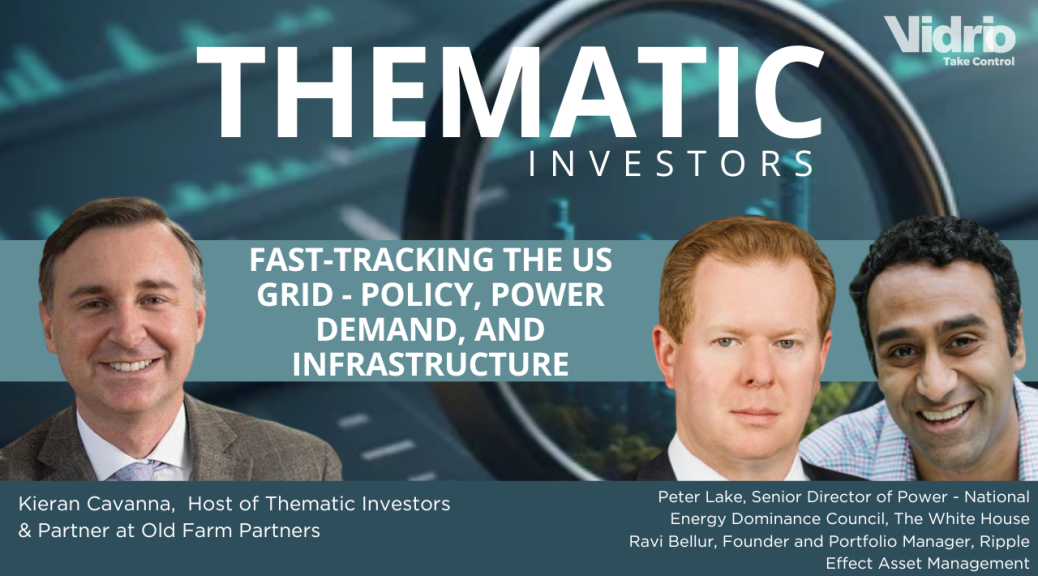
Thematic Investors: Fast-Tracking the US Grid – Policy, Power Demand, and Infrastructure
The demand dynamic for US power growth is significantly accelerating, with spending on new generation assets – necessary to keep pace – nearing $350B over the next five years. This presents a tremendous opportunity for institutional investors focused on the total energy complex and its ripple effects across infrastructure, commodities, and more. From a policy standpoint, flexibility will be key to ensure build-outs, regulation reforms, and energy supply chains are all interconnected.
In our latest episode of the Thematic Investors podcast, we welcome two experts who live and breathe the world of energy today, each with their own perspectives on investing, regulation, affordability, and reliability. Tune in for a thought-provoking conversation on what it will take to power American infrastructure and the target areas for investment in the near future:
– Ravi Bellur, Founder and Portfolio Manager, Ripple Effect Asset Management.
– Peter Lake, Senior Director of Power – National Energy Dominance Council, The White House.
Key takeaways from this discussion include:
– What are the initial estimates on new power generation that the US will require by 2030?
– Back in June, Thematic Investors welcomed Roland Vetter, Portfolio Manager, Envestra Capital, who discussed the connection of energy across Europe. What will need to occur to connect US supply chains, regulatory reforms, and demand centers efficiently so that it’s not just business as usual and everyone involved recognizes the speed for power?
– How can institutional investors like pensions and foundations avoid stranded or improperly hedged assets in this increased energy cycle?
– How are hyperscalers involved, and what does that mean for contracting on existing electrical resources and how the investment cost eventually gets passed to the retail consumer?
– What is the policy that the administration passed that is helping to fast-track data center connection in 60-90 days instead of 6-8 years?
– How is the President’s Ratepayer Protection Pledge helping residential customers in states like Georgia and Alabama eliminate property taxes, while getting companies like Meta and Google to get projects built and increase their compute power?
-What does obstructive regulation look like in the energy sector, and why is common sense making its way back to environmental impact statements?
– Which emerging technologies are prioritized for delivering reliable affordable power to the new economy?
– and much more.
Connect with Kieran Cavanna:
Connect with Ravi Bellur:
Connect with Peter Lake:
About Ravi Bellur:
Ravi Bellur is the Portfolio Manager and Founder of Ripple Effect Asset Management, a New York-based hedge fund focused on investment opportunities across energy, mobility, industrials, and infrastructure. Before launching Ripple Effect, he held investment roles at Goldman Sachs, BlackRock, and PointState Capital, where he developed extensive experience analyzing global energy markets and real asset investments. Ravi is known for connecting long-term trends across power generation, industrial growth, and emerging technologies to identify investment opportunities shaped by changes in the global economy.
About Peter Lake:
Chairman Lake currently leads power grid policy at the White House as Senior Director of Power at the National Energy Dominance Council. The advisory work at his consulting firm Cardinal Rose will be inactive during his time at the White House.
As one of the few executives to serve as the highest-ranking government official in both power (PUCT/ERCOT) and water (TWDB) in a top ten global economy (Texas), Chairman Lake has led multiple organizations through some of the largest crises in recent American history. His decisive leadership under intense pressure and unrelenting media scrutiny delivered sensible solutions and systemic change previously regarded by many as impossible. By addressing some of the most complex problems in two of the economy’s most critical sectors, he has established a reputation as one of the world’s go-to agents of meaningful change.
Podcast: Play in new window | Download | Embed